Labyrinth Baffle Grease Filter
Material: SS304 / SS430; baffle, frame and handle grades specified separately
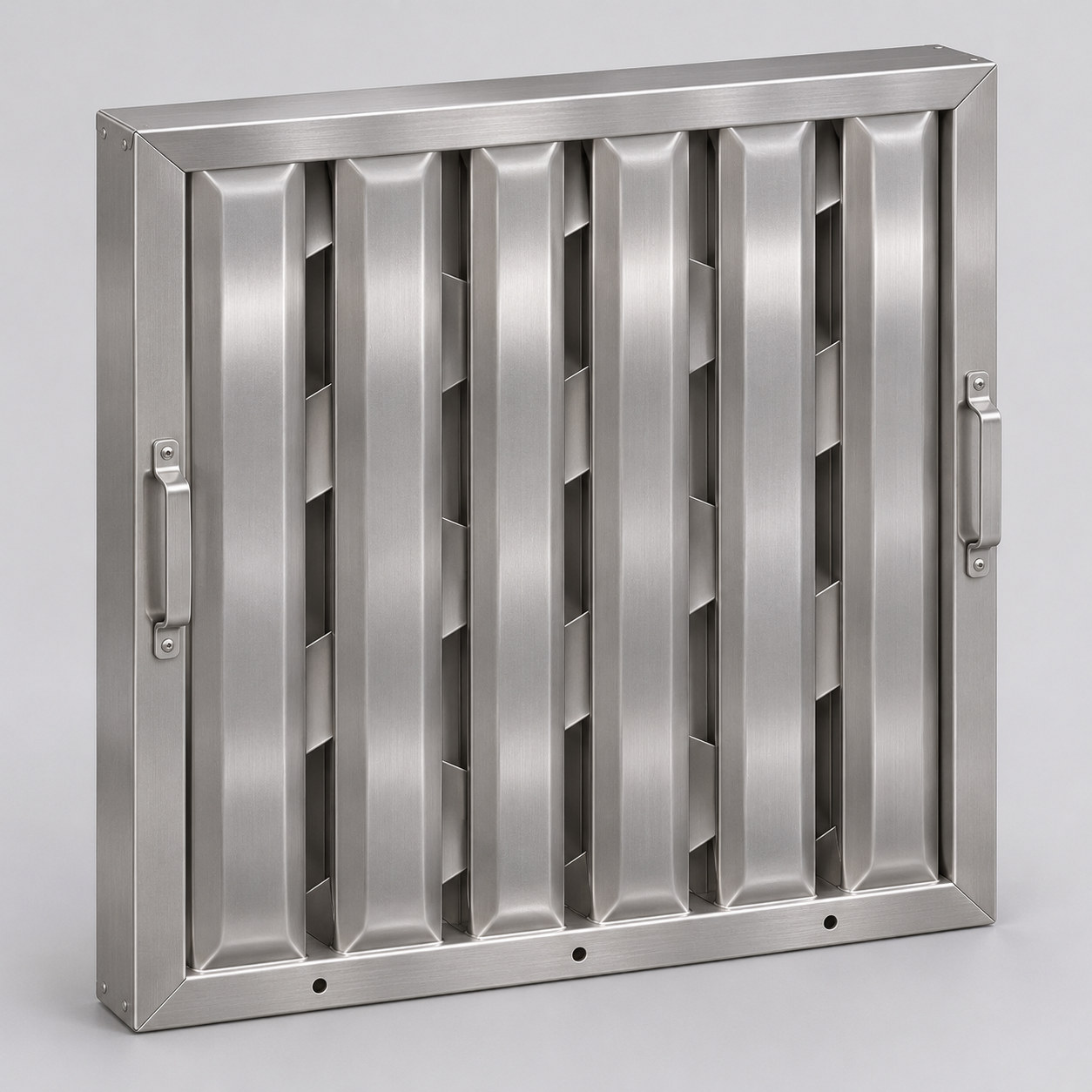
A sheet-metal labyrinth cassette with folded baffles and drainage openings, made to the reviewed canopy interface and cleaning requirements.
Specification review
- Structure
- Folded labyrinth baffles in a shallow channel frame
- Geometry
- Width, height, depth, sheet thickness and channel profile to drawing
- Interface
- Rail fit, handles, drain position and orientation reviewed separately
Material and specification review
Folded labyrinth baffles in a shallow channel frame
Specify these parameters separately
- Cassette and channel dimensionsmm
- Provide width, height, depth, sheet thickness and baffle profile.
- Rails, drainage and cleaning accessmm
- Provide rail clearances, handle envelope, drain layout and cleaning requirements.
- Operating conditions—
- Provide medium, temperature, cleaning and process acceptance requirements; no unverified rating is implied.
Unspecified dimensions, ratings and tolerances remain unconfirmed. Attach drawings, samples or equipment-interface details; the agreed document defines the final specification.
Typical applications
- Reviewed commercial-kitchen extraction canopies
- Replacement baffle cassettes matched to an equipment drawing
- Drawing-based grease-separation prototypes
Customizable details
- Frame width, height, depth and baffle-channel geometry
- Handle position, drain-hole layout and mounting rails
- Separate baffle, frame and handle material grades
- Edge finish, joining and cleaning access by review
Before you request a quote
- Canopy model, frame opening, rail drawing and required installation orientation
- Cassette dimensions, baffle profile, spacing, sheet thickness and drain details
- Baffle/frame/handle grades, cleaning agents and proposed cleaning cycle
- Service conditions, project acceptance criteria, quantity and destination
Quality checkpoints
- Baffle profile, frame dimensions and channel continuity
- Joining, edge condition, handles and drainage openings
- Equipment-fit sample and removal access
- Project-specific separation and installed-system checks by agreement
Structure and function
Folded metal baffles form an indirect air path in a removable cassette. Collected liquid is directed toward the specified drain openings. The illustration uses six front channels, two side handles and three bottom drain holes as one drawing example, not a universal standard. It is not a woven-mesh screen or knitted pad.
Material selection
SS304 and SS430 sheet are research-supported candidates. Specify baffles, channel frame, handles and joining consumables separately. Exact standards, finish, corrosion suitability and cleaning compatibility require project review; other alloys are not automatic substitutes.
Dimensions and custom range
Provide cassette width, height and depth, sheet thickness, baffle profile, clear channel dimensions, handle envelope, drain pattern and rail clearances. Feasible ranges and tolerances are confirmed from the drawing or sample; no stock size, airflow or pressure-drop value is implied.
Forming and joining
Review sheet cutting, folding or roll forming, frame preparation, joining, deburring and cleaning before production. Confirm the interlocking baffle layout, access for cleaning and drain continuity through a sample. Manufacturing tooling and acceptance are drawing dependent.
Installation and selection
Match the cassette to the equipment rails and the designer-specified orientation, drainage and removal space. Isolate equipment before fitting or cleaning. The complete canopy system requires its own project approval; no fire rating, certification, capture efficiency or temperature limit is claimed.
Packing and dispatch
Separate cassettes with protective foam and protect handles and drain edges as agreed for the finish, quantity and destination. Generated packing/application media are design illustrations, not actual factory photographs or completed customer shipments.
MOQ and lead time
MOQ, lead time and feasible dimensional range are confirmed after drawing/sample, material, tooling and quantity review. Below-MOQ sample inquiries remain subject to factory review. Confirm packing, inspection and dispatch requirements before the agreed production schedule; no fixed inventory, price or dispatch date is implied.